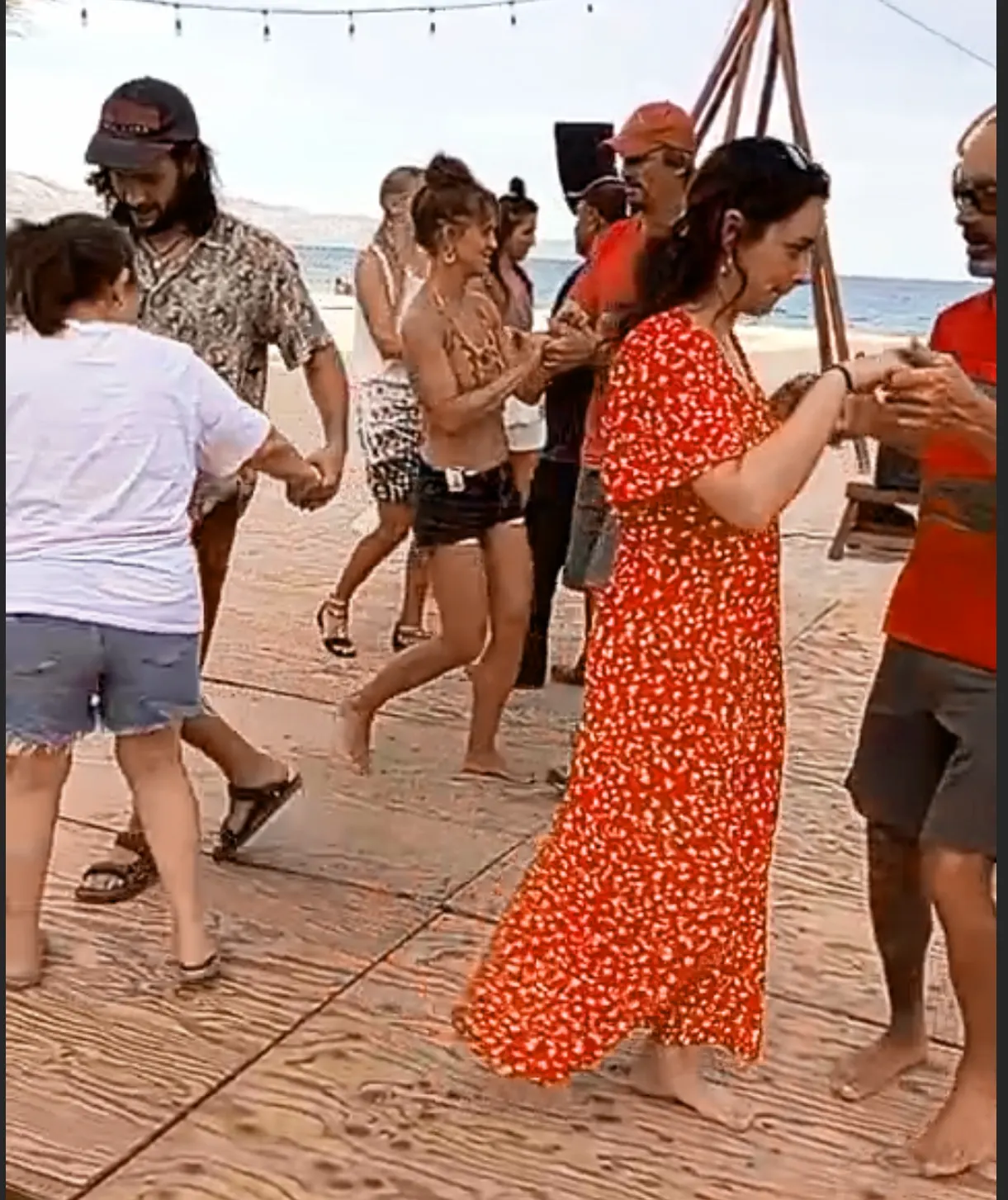
I had a wonderful private class recently with a couple who were completely new to merengue. They had caught one of my group lessons first — the weekly Tuesday night class at La Tuna in La Ventana — but wisely decided they wanted the focused attention of a private session to really get the foundations right. That instinct paid off.
The core concept we spent the most time on is one every beginner needs to understand: partner tension. But before we get into the technique, let’s start where every good dance starts.
(New to the Latin dance scene in Baja? Read: Salsa Dancing in Baja California Sur: What the Scene Actually Looks Like)
A Brief History of Merengue
Merengue is one of the great dances of the Caribbean, born on the island of Hispaniola — specifically in the Dominican Republic — where it has been part of the culture since the country’s earliest years. It’s characterized by a driving, constant rhythm with a clear beat on every step, which is part of what makes it so accessible. There’s nowhere to hide from the music, and that’s a good thing — it forces you to feel it.
Today merengue is danced everywhere from Santo Domingo to New York to La Ventana, Baja California — and once you feel the rhythm in your body, you’ll understand why it travels so well.
The Philosophy of the Dance
The moves, the tension, the hand positions — all of that is just the language. The message is the same it has always been: be present, have fun, and make your partner feel incredible. Make her feel like the only woman in the room.
When you approach the dance with that mindset, everything else falls into place. A simple basic step done with genuine warmth and attention will always feel better than a complex move done mechanically. So as you learn the techniques below, keep coming back to that feeling. That’s what you’re really practicing.
What Is Tension, and Why Does It Matter?
In merengue, “tension” doesn’t mean stiffness. It’s the light, fluid connection between partners through their joined hands — the invisible glue that lets the lead communicate direction and lets the follow respond naturally. Without it, leads can’t lead and follows can’t follow. Everything else falls apart.
The Follow’s Hand: Bicycle Position
The follow holds her hands horizontally with fingers pointing straight down — not gripping like a claw. The back of the hand bends slightly upward, about 90 degrees. This creates two vertical surfaces that the lead can push and pull against. This is sometimes called the “bicycle” or “motorbike” grip.
By holding her hands this way, the follow gives the lead something to work with — he can push against her palm to move her away, and pull against her fingers to bring her closer.
The Lead’s Hand: Fonzarelli Position
The lead holds both hands with four fingers pointing toward each other and thumbs up — like a double thumbs-up. The follow then rests her hands over those four fingers.
Two important things to keep in mind:
- The lead’s thumbs generally stay up and out of the way. If the thumbs drop down onto her hands, her movement gets locked and she loses the ability to respond freely to his lead. That said, there are moments when the lead will intentionally close his thumbs on his partner’s hands — but this is only done when specifically needed to communicate something, not as a default resting position.
- The follow does not squeeze. There needs to be space inside the hold so both partners can move freely. He needs room to pull her fingers toward him and to push against her palm — and that only works if she isn’t clamping down.
Calibrating at the Start of Every Dance
Before jumping into any moves, I always spend the first 10–20 seconds of a song calibrating with my partner. As the lead, I stay stationary and march to the beat while expanding and contracting my elbows — gently pushing her away and pulling her back toward me. Her elbows stay close to her sides and shouldn’t be moving around.
Neither partner should be flexing hard or going rigid. This is a fluid dance. The calibration is simply about syncing the connection before anything fancy begins — getting a feel for how much tension works well between these two particular people on this particular song.
It’s also worth noting that while I tend to describe the lead as male and the follow as female — because that’s the traditional setup in salsa and merengue — it absolutely doesn’t have to be that way. Switching roles is actually a great learning exercise, because it helps both partners develop a feel for what the other person is experiencing through that tension connection.
Four Beginner Moves to Build Toward
Once you’ve got tension and calibration down, here’s a natural progression of moves to start learning:
1. Arm Slide and Travel Walk-Around
Both of the follow’s hands are lifted into the air. The lead turns to his left, placing his right hand (with hers) behind her head, and then his left hand (with hers) behind his own head. He then releases both hands and slowly steps back, creating distance between them — sliding his hand along her arm the whole time to maintain connection — until he gently catches her left hand in his right.
From there, he walks in a wide arc to the left, guiding her hand over her head so she spins in place, until they end up facing each other again. Hands swap back to the basic position.
2. Side by Side
The lead raises his left hand and makes a counterclockwise circular motion, bringing her hands down crossed at her waist so she ends up standing to his right — side by side. Both partners can look at each other and smile.
From there, with hands still crossed, the lead gently moves her from his right side, across in front of him, to his left side — and then back again. Think of it as a way to show her off: hey, look who I’m dancing with. It’s a move that makes the follow feel like the only woman on the dance floor — which, if you absorbed the philosophy above, is exactly the point.
This position also opens up a number of other moves to lead from, but those are for another lesson. When you’re ready, slowly unwind back to the basic position. (There’s only one clean way to unwind from this hold — see if you can figure it out!)
3. Lead Turn, Follow Turn
The lead releases her left hand so now only his left hand is holding her right hand. He begins taking small baby steps clockwise. As he turns, his left hand naturally moves behind his back into an L-shape, with the elbow bent and the hand still holding hers.
His right hand then reaches back, takes her hand, and his left releases — he continues turning in the same clockwise direction. As his right hand rises, he lifts her hand overhead and she follows into a clockwise spin as well. That’s the lead turn and follow turn in one smooth sequence.
4. Double Hand Turn
This one is the most complex of the four. Both of the follow’s hands are lifted above her head. The lead’s left hand holds her right hand, fingers pointing right and thumb up. His right hand then takes her left hand and passes it across to his left hand, whose thumb comes down briefly to hold her hand in place. Now his right hand is free — it goes up and over, grabs her hand again, and continues the movement in a wide horizontal semicircle above her head. His left hand then takes over and completes that circle, turning her all the way around until she’s facing him again with hands crossed.
To finish, the lead presses the backs of both hands together, lifts her crossed hands straight up and over her head — almost like a double hair comb — and then lets go. His hands then trail down to her shoulders and along her arms, guiding them back down to the basic starting position. It’s a beautiful move once it flows.
(There are also more advanced moves that build directly from here — like the windmill — but those are for another lesson.)
A quick note on footwear: the right shoes make a big difference when you’re learning turns and connection. I’m a Fuego Dance Shoes brand ambassador — their split-sole design and FlowTec™ outsole are built for outdoor surfaces like La Tuna’s stage. Use code SALSAPAUL10 for 10% off at fuegodance.com.
A Note on Roles and Learning
As mentioned, the lead is traditionally the man and the follow the woman — but this isn’t a rule, and switching roles is a wonderful learning exercise. When a lead tries following, and a follow tries leading, each person gains a much deeper appreciation for what the other is feeling through that tension connection.
The Most Important Thing to Remember
Your mind will understand all of this before your body does — and that’s completely normal. The body learns through repetition, not explanation. Be patient with yourself, get the tension fundamentals solid first, and the moves will follow naturally from there.
And if you want to go deeper on musicality alongside your partner work, check out: You Don’t Need Better Footwork. You Need Better Timing.
Learn Merengue in La Ventana, Baja California Sur
If you’re visiting La Ventana or the East Cape area of Baja California Sur and want to experience these concepts in person, I offer both group and private lessons at BCS Latin Dance.
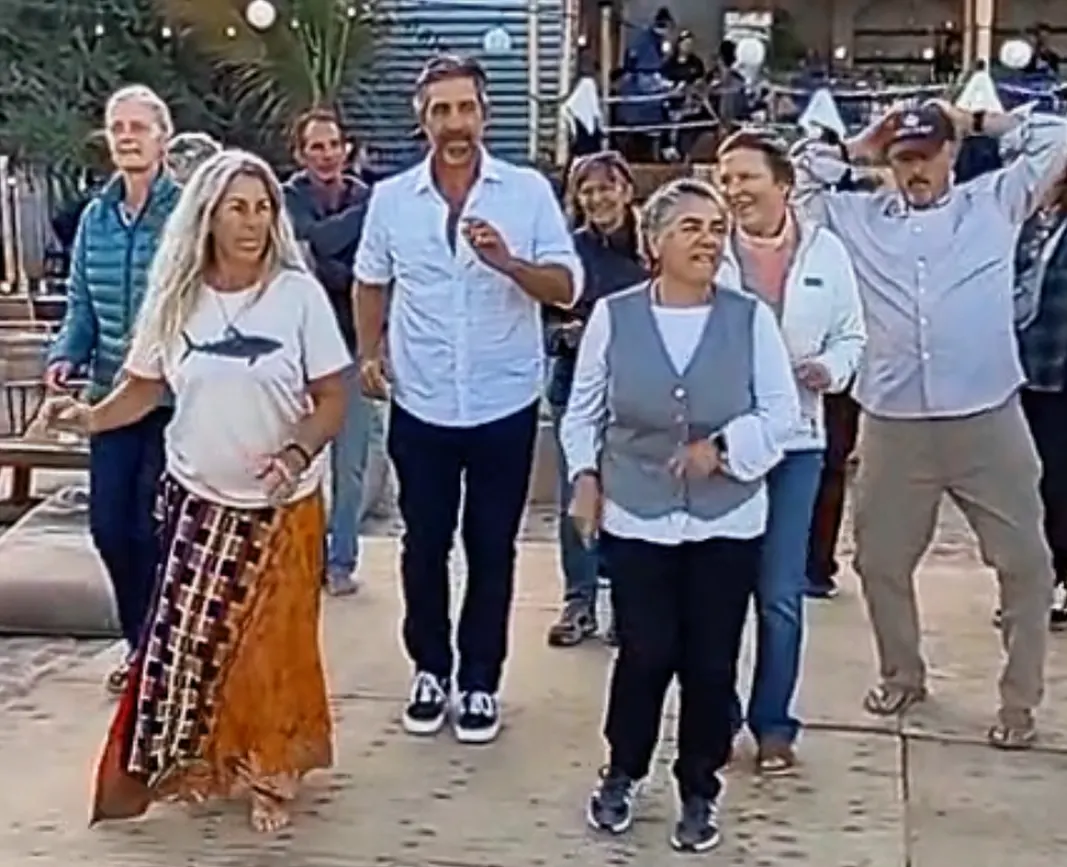
Every Tuesday evening I teach a free beginner salsa and merengue class at La Tuna beach bar in La Ventana — no partner needed, all levels welcome. It’s one of the best nights out on the East Cape, with live music from Maceo Limonte and a real social dance floor under the Baja sky.
For private lessons tailored to your pace and goals — whether you’re a complete beginner or looking to level up specific moves like the ones above — get in touch and we’ll set something up.
There really is nothing quite like feeling that connection click for the first time on the dance floor.
Comments
Loading comments…
Leave a comment